Release requirements

We are purchasing through the online docking platform of
Buy Chemical Plastics.
Are you still searching for the product you have in mind?
Try "Posting Demands"!
Secured Trading

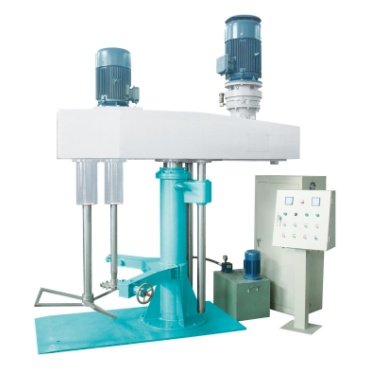
SJ Double Shaft Butterfly Mixer

Price (tax incl.)
Negotiable (Subject to final quotation)
  • MOQ1 Set
  • Trade typeSpot Avail
SKU name Unit price(tax incl.) Stock Quantity
sku-1 Negotiable 1 Set
  1. Q & A:What is a butterfly mixer and what materials is it suitable for?
  2. The butterfly mixer is a type of industrial mixing equipment specifically designed for processing medium to high-viscosity materials, typically ranging from 50,000 to over 1,000,000 mPa·s. It features a unique triple-blade agitator, shaped like butterfly wings, that operates with minimal clearance to the tank wall. This design produces intense shear forces and efficient folding of materials, enabling thorough mixing even in very thick or sticky formulations. Butterfly mixers are widely used in industries such as adhesives, sealants, silicone pastes, high-solid coatings, inks, printing pastes, cosmetics, pharmaceuticals, and food manufacturing. The machine excels at handling non-flowing materials that are too thick for standard agitators. With options for vacuum mixing, high-speed dispersing, and process automation, butterfly mixers can be customized to fit a wide range of formulations and industry requirements.

  3. Q & A:Is vacuum mixing available, and what are the benefits?
  4. Yes, vacuum mixing is a key feature available on all butterfly mixers. The system can operate under a vacuum level of up to -0.08 MPa, depending on the application and tank design. The primary advantage of vacuum mixing is air removal—especially important for high-viscosity materials that tend to trap air during mixing, which can cause bubbles, defects, or reduced product performance. Vacuum operation improves product density, ensures a smoother texture, and enhances stability in formulations like silicone sealants, electronic encapsulants, and cosmetic pastes. It also reduces oxidation and contamination, prolonging product shelf life. In some applications, vacuum mixing enables downstream processes like degassing or filling under vacuum without needing additional equipment. For sensitive formulations, such as thermal interface materials or medical-grade pastes, vacuum mixing is often mandatory to meet product standards. The vacuum system can be fully automated and integrated into the mixer’s PLC for precise control and repeatable results.

  5. Q & A:Can the mixer be equipped with a dispersing disc?
  6. Yes, the butterfly mixer can be equipped with a high speed dispersing disc to enhance processing flexibility. The dispersing disc is mounted coaxially or independently, depending on the model, and can reach rotational speeds of up to 1,500 rpm. While the butterfly blade ensures macro mixing and material turnover, the dispersing disc focuses on breaking down agglomerates, powders, and solid clusters into fine particles. This combination allows for simultaneous mixing and dispersion, significantly improving product uniformity and reducing process time. It is particularly useful for applications involving pigments, fillers, nanomaterials, or powder additives—such as in paints, ceramic slurries, functional coatings, and high-performance adhesives. The dual-action system minimizes the need for post-dispersion steps or secondary milling equipment. Users can control the speed of both the butterfly blade and the disperser independently, offering precise adjustment based on material rheology and formulation requirements.

  7. Q & A:What is the available capacity range?
  8. Butterfly mixers are available in a wide range of capacities from 50 liters to over 5,000 liters, making them suitable for both laboratory-scale R&D and large-scale industrial production. Standard models include 100L, 300L, 500L, 1000L, and 2000L configurations. Custom tank sizes and proportions can also be engineered to meet specific production requirements or space constraints. The working volume typically ranges from 60% to 80% of the total tank capacity, depending on the viscosity and mixing behavior of the material. For pilot-scale operations, smaller bench-top or mobile mixers can be supplied. Large production systems can also be designed with double planetary gearboxes, hydraulic lifting systems, and jacketed tanks for heating or cooling. Whether you’re producing batches of 10 kg or 2 tons, we offer modular configurations and tailored accessories (e.g., vacuum pumps, temperature control units, load cells) to fit your workflow. This flexibility makes butterfly mixers ideal for batch processing environments.

  9. Q & A:Is the mixer easy to clean and maintain?
  10. yes, butterfly mixers are engineered for ease of cleaning and long-term reliability. The mixer body has a smooth, hygienic design with minimal dead zones, reducing the risk of residue buildup. Mixing blades can be easily disassembled for manual cleaning or configured to support CIP (Clean-in-Place) systems for automated flushing with solvents or water. Tank walls can be coated with non-stick or anti-corrosive linings to prevent material adhesion, especially useful in adhesive or sealant production. For high-hygiene industries like cosmetics or pharmaceuticals, we offer electropolished stainless steel surfaces (up to Ra ≤ 0.4 µm) and FDA-compliant gaskets. Maintenance-wise, critical components like seals, bearings, and gearboxes are designed for long service life and easy access. Scheduled maintenance is straightforward and can be planned using the mixer’s built-in runtime counters or alarm system. We also provide detailed operation manuals, training, and remote troubleshooting to ensure continuous and safe operation.

Trade terms: FOB Language: 1